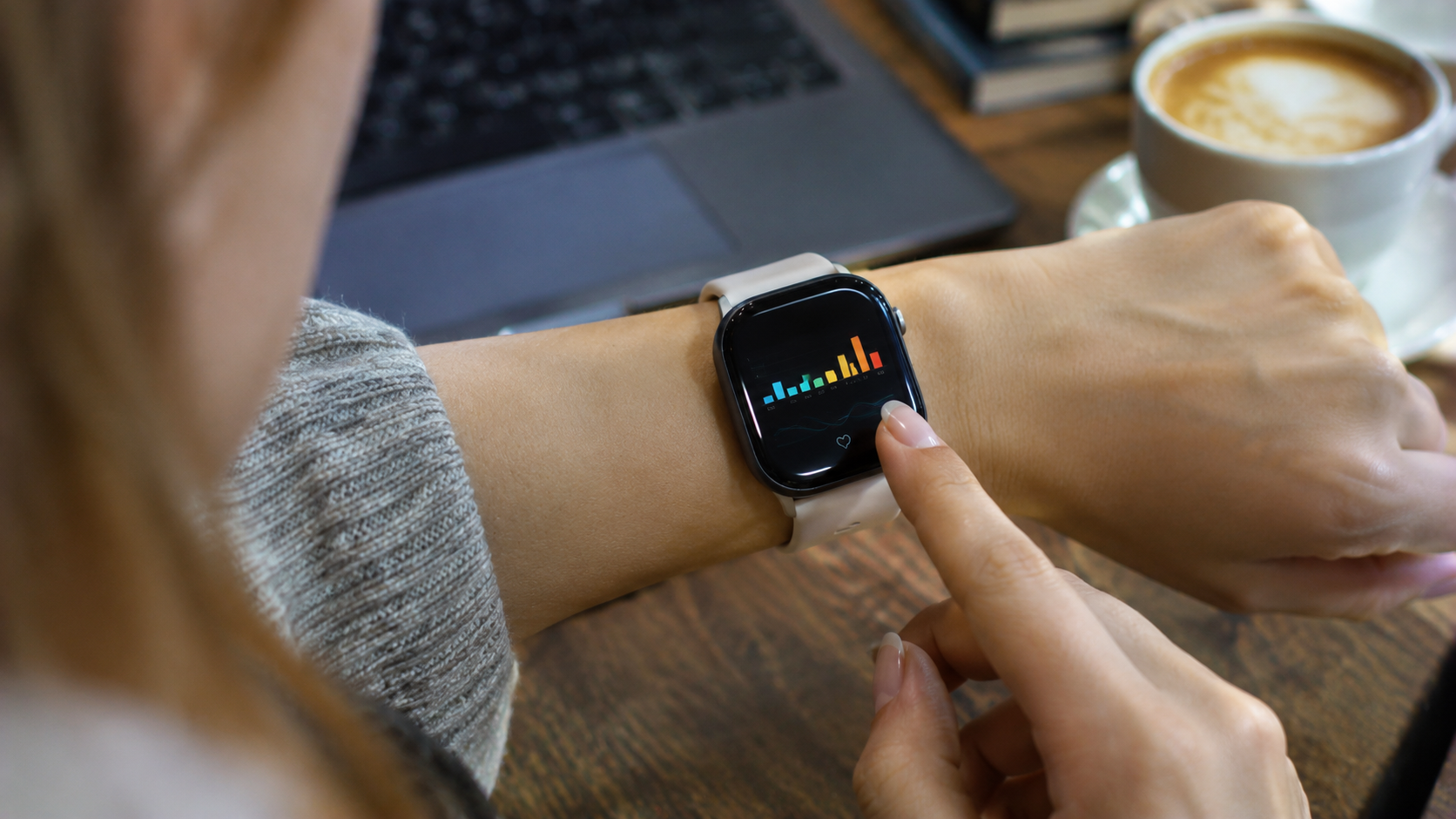



Smartwatch stress tracking estimates how your body responds to physical and mental demands by analyzing signals such as heart rate, heart rate variability (HRV), and, on compatible devices, electrodermal activity. These measurements can reveal changes associated with exercise, inadequate sleep, emotional excitement, illness, or everyday pressure. However, a smartwatch cannot directly measure your thoughts or determine exactly why you feel stressed.
A stress score of 75 can have completely different meanings depending on the device you wear. On Garmin, a score of 75 indicates substantial physiological activation, while a score of 75 under Fitbit's former Stress Management Score generally indicated fewer physical signs of stress. Google has since replaced that Fitbit metric with a feature called Resilience in the redesigned Google Health app.
On November 20, 2026, researchers from the University of British Columbia published a study in JMIR Biomedical Engineering examining the ability of commercial wearables to detect physiological responses during controlled stress experiments. The study involved 62 healthy participants and found promising results for heart rate and skin conductance measurements, but less consistent performance across HRV measurements. The researchers emphasized the need for additional validation in everyday environments.
The findings are particularly relevant as manufacturers introduce increasingly sophisticated wellness features. Apple Watch Series 12 and Apple Watch Ultra 4 offer more frequent cardiovascular measurements, while Garmin, Samsung, Google, Oura, and WHOOP continue to develop their own approaches to stress and recovery monitoring.
A high smartwatch stress score does not necessarily mean that you are anxious, unhealthy, or developing a medical condition. Understanding what the device actually measures is essential if you want to use the information without becoming unnecessarily worried about every change.
What Is Smartwatch Stress Tracking?
Smartwatch stress tracking is a wellness feature that uses physiological measurements to estimate how actively your body is responding to different demands. Rather than directly measuring emotional stress, it identifies patterns that may accompany changes in autonomic nervous system activity.
Your autonomic nervous system helps regulate involuntary functions such as heart rate, digestion, and certain aspects of breathing. Its activity changes throughout the day as you move, rest, eat, exercise, concentrate, and respond to your surroundings.
Many smartwatches use optical sensors to estimate cardiovascular signals. Their software then combines these measurements with other available information and converts the results into a number, color-coded graph, or descriptive category.
The resulting stress score is therefore an algorithmic estimate rather than a direct measurement of a single substance or biological process.
What Sensors Make Smartwatch Stress Tracking Possible?
Different wearables use different combinations of hardware. Some rely primarily on heart rate and heart rate variability, while others incorporate additional information about movement, skin conductance, temperature, and sleep.
The following measurements contribute to various stress and recovery features.
| Sensor or measurement | What it detects | Potential contribution |
| Optical heart rate sensor | Changes in blood volume | Heart rate and pulse interval estimates |
| HRV analysis | Variations between consecutive heartbeats | Physiological regulation and recovery patterns |
| EDA sensor | Changes in skin conductance | Physiological arousal |
| Accelerometer | Body movement | Activity context and motion filtering |
| Skin temperature sensor | Temperature changes at the measurement site | Additional physiological context |
| Sleep tracking | Estimated sleep patterns | Recovery and longer-term wellness insights |
| Electrical heart sensor | Electrical activity of the heart during supported measurements | Additional cardiovascular information |
Not every smartwatch includes all these sensors. A device with more sensors also does not automatically provide more accurate stress estimates. The quality of its algorithms, signal processing, and validation matters just as much as the hardware.
How Smartwatch Stress Tracking Uses Heart Rate Variability
Heart rate variability, commonly abbreviated as HRV, describes differences in the time between consecutive heartbeats. It is usually expressed in milliseconds rather than beats per minute.
A heart rate of 60 beats per minute does not necessarily mean that exactly one second passes between every heartbeat. One interval might last 980 milliseconds, another 1,040 milliseconds, and another 960 milliseconds.
These variations are a normal part of cardiovascular regulation. They are influenced by breathing, autonomic nervous system activity, physical condition, and numerous other factors.
Under comparable resting conditions, a temporary reduction in HRV can be associated with increased physiological strain. However, the relationship is not sufficiently specific to identify the exact cause of that strain.
How Heart Rate and HRV Differ in Smartwatch Stress Tracking
Heart rate and heart rate variability provide related but distinct information. Two people can have identical average heart rates while displaying different patterns of variation between beats.
| Characteristic | Heart rate | Heart rate variability |
| What it measures | Number of heartbeats per minute | Variation between heartbeat intervals |
| Typical unit | Beats per minute | Milliseconds |
| Changes during exercise | Usually increases | Frequently decreases during exertion |
| Influenced by breathing | Yes | Yes |
| Influenced by sleep and recovery | Yes | Yes |
| Can identify emotional stress independently | No | No |
A low resting heart rate does not guarantee high HRV, and high HRV does not automatically establish excellent health. Both measurements need to be interpreted in context.
Is Higher HRV Always Better for Smartwatch Stress Tracking?
Higher HRV relative to your own usual range can sometimes indicate favorable recovery, particularly when measurements are obtained under consistent resting conditions.
However, HRV varies substantially between individuals. Age, fitness, medications, breathing patterns, measurement methods, and cardiovascular conditions can influence the result.
Unusually high or irregular readings may also arise from measurement artifacts or abnormal heart rhythms. Consequently, there is no single HRV target that every smartwatch owner should attempt to reach.
Scientific guidance published in 2026 emphasizes the importance of standardized measurement conditions and careful interpretation of wearable-derived HRV data.
The most useful approach is to compare your readings with your own established patterns rather than treating another person's HRV as a performance target.
What Is a Normal Smartwatch Stress Score?
A normal smartwatch stress score depends on the device and the scoring system it uses. There is no internationally standardized 0–100 stress scale that applies to every smartwatch.
Some manufacturers assign higher numbers to greater physiological strain. Others use higher scores to represent better recovery or resilience.
Even when two manufacturers display a score out of 100, the underlying calculations can be completely different.
Smartwatch Stress Tracking Scores by Brand
Before interpreting a number, identify which metric your device is displaying. Stress, readiness, resilience, recovery, and energy scores are not interchangeable.
| Wearable platform | Metric | General interpretation |
| Garmin | Stress level, 0–100 | Higher values indicate greater estimated stress |
| Legacy Fitbit app | Stress Management Score, 1–100 | Higher values indicated fewer signs of physiological stress |
| Google Health | Resilience | Optimal, Balanced, or Low |
| Samsung Galaxy Watch | Stress indicator | Lower or higher estimated physiological stress |
| Apple Watch | HRV, Readiness, and Vitals | Personal cardiovascular and recovery patterns |
| WHOOP | Stress Monitor, 0–3 | Higher values indicate greater estimated stress |
| Oura Ring | Daytime Stress | Stressed, Engaged, Relaxed, or Restored |
These metrics reflect different algorithms, measurement periods, and intended purposes. A Garmin score of 70 cannot be converted directly into a WHOOP score of 2.1 or an Apple Watch HRV measurement of 35 milliseconds.
How Garmin Smartwatch Stress Tracking Works
Garmin estimates stress using cardiovascular information, particularly heart rate variability. Compatible devices can collect readings throughout the day when measurement conditions allow.
The Garmin stress scale ranges from 0 to 100. Lower numbers represent conditions associated with rest, while higher numbers indicate greater estimated physiological stress.
Garmin Connect allows users to review changes over time and identify periods when their bodies were relatively relaxed or under greater demand.
What Garmin Smartwatch Stress Tracking Numbers Mean
Garmin divides its stress scale into four ranges.
| Garmin stress score | Classification |
| 0–25 | Rest |
| 26–50 | Low |
| 51–75 | Medium |
| 76–100 | High |
A short period of high stress can occur during ordinary daily activities. The score becomes more informative when considered alongside the timing, duration, and surrounding circumstances.
Garmin may leave gaps in its all-day stress graph during movement or exercise when reliable measurements are unavailable.
Why Garmin Smartwatch Stress Tracking Shows High Stress While Sitting
Sitting still does not guarantee that your body is physiologically relaxed. You may be recovering from a workout, digesting a meal, concentrating intensely, experiencing discomfort, or responding to caffeine.
The watch observes physiological signals rather than your surroundings or intentions. It cannot determine whether you are sitting on a comfortable sofa or preparing for a difficult work presentation unless additional contextual information is available.
A useful first step is to compare the reading with your recent activities, resting heart rate, and usual daily pattern.
How Fitbit and Google Health Smartwatch Stress Tracking Changed in 2026
Fitbit users may notice that their stress-related dashboard looks different from older instructions. On May 19, 2026, the Fitbit app transitioned into the Google Health app.
As part of this redesign, Google replaced the previous Stress Management Score with Resilience in its Mental Wellbeing section. This change is important because many existing online guides still describe the older numerical system.
The current feature focuses on the body's estimated capacity to manage and recover from physical and mental demands during the day.
What Google Health Resilience Means for Smartwatch Stress Tracking
The redesigned Google Health app presents Resilience as a qualitative status:
- Optimal. The available measurements suggest favorable capacity to handle daily demands.
- Balanced. The estimate falls within a more moderate range.
- Low. The available information suggests reduced resilience relative to the feature's criteria.
The calculation incorporates several categories of information, including recent cardiovascular responses, physical activity, and sleep.
Resilience describes a broader wellness estimate rather than the precise amount of emotional stress you are experiencing at a particular moment.
How to Find Smartwatch Stress Tracking in Google Health
Compatible Fitbit and Google Pixel Watch owners can access stress-related features through the updated application.
To review the available information:
- Open the Google Health app on your smartphone.
- Select the Health tab.
- Find the Mental Wellbeing section.
- Open Resilience to review your daily status.
- Select Body Responses if your wearable supports this feature.
- Compare the available daily, weekly, and monthly information.
- Add mood information when relevant.
Features vary by wearable model, subscription, and software version. Older Fitbit documentation may use different names or describe functions that have since changed.
What Body Response Alerts Mean in Smartwatch Stress Tracking
Compatible Google and Fitbit wearables can detect physiological changes that may accompany heightened arousal. Some models incorporate continuous electrodermal activity measurements alongside cardiovascular information.
When an alert appears, the user may be invited to reflect on their emotional state.
This is useful because similar physiological changes can accompany excitement, frustration, nervousness, or other experiences. Logging how you feel provides context that the wearable cannot reliably infer from sensor data alone.
The alert itself is not a diagnosis of anxiety.
How Apple Watch Smartwatch Stress Tracking Works in 2026
Apple Watch approaches stress and recovery through several health and wellness measurements rather than simply reproducing Garmin's stress score.
In September 2026, Apple introduced a new Health Sensing System on Apple Watch Series 12 and Apple Watch Ultra 4. The updated hardware supports more frequent heart rate and HRV measurements, expanded Vitals information, and a readiness score.
Apple Watch Series 12 can collect HRV measurements as often as every five minutes under supported conditions. This provides more opportunities to observe changes throughout the day than earlier generations offered.
However, more frequent sampling does not make HRV a direct measurement of emotional stress.
Where to Find Apple Watch Smartwatch Stress Tracking Data
Apple Watch owners can review HRV through the Health app on their iPhone.
The general process is straightforward:
- Open the Health app.
- Locate the heart-related measurements.
- Select Heart Rate Variability.
- Review the available daily or longer-term chart.
- Compare readings obtained under similar conditions.
- Check relevant information in the Vitals app.
- Use the Readiness feature if supported by your model.
- Record your emotional state through the available Mindfulness features when useful.
On Apple Watch Series 12 and Apple Watch Ultra 4, the expanded Vitals experience provides additional opportunities to review HRV and daytime cardiovascular information.
Older Apple Watch models offer a different combination of measurements, so the available screens depend on your hardware and software.
Do Third-Party Apple Watch Apps Improve Smartwatch Stress Tracking?
Third-party applications can convert Apple Watch cardiovascular information into proprietary stress, recovery, or energy scores.
These tools may offer clearer graphs, additional context, and more convenient comparisons. However, an application that creates an easy-to-understand percentage does not necessarily improve the accuracy of the underlying sensor measurements.
Before paying for an additional subscription, check which data the application actually uses, how often those measurements are updated, and whether its interpretation has been independently evaluated.
Compatibility between a smartwatch and your smartphone also matters. The guide to which phone upgrade features are worth paying extra for in 2026 explains how to evaluate practical hardware and software improvements before replacing a device.
How Samsung Galaxy Watch Smartwatch Stress Tracking Works
Samsung Health allows compatible Galaxy Watch owners to estimate stress using heart rate information and other available physiological measurements.
Depending on the watch model and configuration, measurements can be taken manually or collected automatically throughout the day.
The results are displayed using a stress indicator and related charts rather than a universal medical scale.
How to Measure Stress Manually on Samsung Galaxy Watch
Manual measurements are particularly useful when you want to compare how your body responds before and after a specific activity.
To take a measurement:
- Wear your Galaxy Watch securely.
- Sit comfortably and remain still.
- Open Samsung Health on the watch.
- Find the Stress feature.
- Select Measure if manual measurement is enabled.
- Keep your arm relaxed during the process.
- Review the result and any available historical information.
If the manual measurement option is unavailable, check whether your device is configured for continuous stress monitoring.
A single result should not be treated as evidence that something is medically wrong.
Why Samsung Smartwatch Stress Tracking Changes Quickly
Samsung stress estimates can change as the watch collects new physiological information. Physical movement, breathing, measurement quality, and recent activity may contribute to differences between consecutive readings.
Taking several measurements immediately after receiving an unexpected score can create misleading comparisons, particularly if you become nervous about the result itself.
It is more useful to measure under reasonably consistent conditions and observe whether the pattern persists.
How Oura and WHOOP Compare With Smartwatch Stress Tracking
Smart rings and screen-free fitness bands offer alternatives to traditional smartwatches. Although they use different designs, many rely on similar physiological principles.
Oura uses Daytime Stress to classify periods of physiological activation and relaxation. WHOOP provides a Stress Monitor that compares cardiovascular signals with personal patterns.
Neither platform can independently establish the psychological cause of a particular response.
Oura Daytime Stress and Smartwatch Stress Tracking
Oura's Daytime Stress feature divides measurements into four categories: Stressed, Engaged, Relaxed, and Restored.
The categories help distinguish higher physiological activation from periods associated with recovery. Oura also offers longer-term features intended to provide additional context about the balance between daily demands and recovery.
Because the device relies on personal measurements, consistent wear during the day and night is important.
WHOOP Stress Monitor and Smartwatch Stress Tracking
WHOOP uses a stress scale from 0 to 3. Higher numbers indicate greater estimated physiological stress relative to the platform's calculation.
The Stress Monitor uses cardiovascular information, including heart rate and HRV, in combination with individual patterns.
Availability depends on the membership plan. As of November 2026, WHOOP lists the Stress Monitor among features available with its Peak and Life memberships.
A WHOOP stress reading should not be interpreted as a percentage or compared numerically with Garmin's 0–100 system.
12 Reasons Smartwatch Stress Tracking Can Show High Stress
A wearable can detect physiological changes without identifying whether they originated from mental pressure, physical exertion, environmental conditions, or another cause.
This is why apparently unexpected stress readings are common.
| Possible factor | Why the reading may change |
| Insufficient sleep | Recovery patterns may be altered |
| Recent exercise | Cardiovascular activation can persist after activity |
| Caffeine | May affect heart rate and other physiological signals |
| Alcohol | Can influence overnight heart rate and HRV |
| Dehydration | May affect cardiovascular responses |
| Illness | Can alter resting physiological measurements |
| Large meals | Digestion changes autonomic activity |
| Emotional excitement | Physiological arousal may increase |
| Work pressure | Can influence heart rate and recovery |
| Hot or cold environments | Temperature can affect physiology and sensor performance |
| Travel and jet lag | Sleep timing and daily routines may change |
| Poor sensor contact | Can reduce measurement reliability |
These factors do not affect everyone in the same way. Their influence also depends on timing, individual characteristics, and the algorithm used by the wearable.
Why Smartwatch Stress Tracking Increases After Drinking Coffee
Caffeine can affect cardiovascular activity and alertness. Depending on your sensitivity, the amount consumed, and your existing condition, a wearable may detect changes after coffee, energy drinks, or other caffeinated products.
A higher score after coffee does not automatically mean caffeine is harmful to you.
If you regularly notice such changes, compare similar mornings with and without caffeine, while taking sleep and activity into account. Avoid making major dietary decisions solely because of a wearable score.
Why Smartwatch Stress Tracking Can Increase After Eating
Digestion requires changes in circulation and autonomic regulation. As a result, some wearable users notice altered stress readings after meals.
Large meals, meal timing, alcohol, and accompanying activities may all influence the pattern.
A post-meal increase in physiological activation does not necessarily indicate emotional distress. Repeated readings need to be interpreted alongside how you feel and any relevant symptoms.
Why Smartwatch Stress Tracking Can Remain High After Exercise
Exercise creates a normal physiological demand. After a workout ends, heart rate and autonomic activity may take time to return toward their usual resting patterns.
A stress tracking algorithm may interpret part of this recovery period as elevated physiological strain.
That does not mean the exercise was necessarily harmful. Regular physical activity can support cardiovascular health and overall wellbeing, even if individual workouts temporarily increase certain stress-related measurements.
Why Smartwatch Stress Tracking Can Show High Stress During Sleep
An elevated overnight stress reading can reflect changes in cardiovascular regulation while you are sleeping. Alcohol consumption, illness, disrupted sleep, recent intense exercise, room temperature, and other factors may contribute.
Some devices use overnight physiological measurements to estimate recovery for the following day.
However, consumer wearables do not necessarily identify the underlying reason for a disturbed night. A high stress score alone cannot establish whether you have a sleep disorder, infection, or cardiovascular problem.
What to Check When Smartwatch Stress Tracking Changes Overnight
An unexpected overnight reading is more informative when several observations are considered together.
| Measurement | Useful comparison |
| Resting heart rate | Your usual overnight range |
| HRV | Your personal readings under similar conditions |
| Sleep duration | Your normal sleep schedule |
| Respiratory rate | Your established pattern, if supported |
| Skin temperature | Changes relative to your baseline |
| Recent activity | Exercise intensity and recovery time |
| Subjective symptoms | How you actually feel after waking |
Persistent changes accompanied by symptoms deserve attention. If you suspect an underlying health problem, professional assessment is more appropriate than relying on an automated wellness dashboard.
Why Smartwatch Stress Tracking Can Show Low Stress When You Feel Anxious
Psychological experience and measurable physiological responses do not always match closely.
A person can feel worried or mentally exhausted without displaying the particular cardiovascular pattern that a wearable associates with higher stress. Conversely, someone may feel calm while recovering from exercise or another physical demand that produces an elevated score.
The relationship between smartwatch measurements and emotional experience has also been examined in scientific research.
A study published in Stress and Health in November 2025 found that Garmin's consumer stress score had limited predictive value for participants' self-reported stress in the experimental setting. Heart rate showed a stronger association among the physiological measurements considered.
These findings illustrate why subjective experience remains important.
A low smartwatch stress score does not invalidate feelings of anxiety, exhaustion, or emotional distress. The device is measuring physiological signals, not evaluating whether your feelings are justified.
How Accurate Is Smartwatch Stress Tracking?
Smartwatch stress tracking can detect useful physiological patterns, but accuracy depends on what is being measured and under which conditions.
A wearable may estimate heart rate reliably during rest while providing less consistent heartbeat interval measurements during movement. Even when the physiological signals are accurate, the software must still interpret what those signals mean.
These are two separate challenges: measurement accuracy and interpretation accuracy.
What Scientific Research Says About Smartwatch Stress Tracking
The November 20, 2026, study in JMIR Biomedical Engineering compared several commercial-grade wearables with laboratory reference equipment during experimentally induced stress.
The researchers examined devices using optical cardiovascular sensors and skin conductance technology. Heart rate and electrodermal activity showed encouraging performance under controlled conditions, whereas the consistency of HRV-derived measurements varied.
The researchers concluded that additional testing outside the laboratory was necessary.
This distinction matters because everyday environments introduce movement, changing temperatures, distractions, different body positions, and individual behavioral patterns that may not be reproduced in controlled experiments.
What Smartwatch Stress Tracking Cannot Reliably Determine
A consumer stress score should not be interpreted as a comprehensive medical assessment.
| Question | Can a smartwatch answer it reliably? |
| Has my heart rate changed? | Often, subject to measurement quality |
| Has my estimated HRV changed? | Often, under suitable conditions |
| Is my physiological activation different from usual? | Potentially |
| Am I definitely experiencing emotional stress? | No |
| Do I have an anxiety disorder? | No |
| Is my cortisol level elevated? | Not from a standard stress score |
| Am I developing burnout? | Not from the score alone |
| Do I need medical treatment? | Cannot determine independently |
A smartwatch can support observation and reflection. It cannot replace a clinical evaluation when someone experiences persistent or concerning symptoms.
How to Improve Smartwatch Stress Tracking Accuracy
Reliable measurements begin with consistent wearing habits. Poor contact, movement, and changing environmental conditions can influence optical cardiovascular signals.
Before interpreting a surprising reading, check whether the watch had suitable conditions to collect its data.
The following practices can improve the usefulness of your measurements:
- Wear the device according to the manufacturer's positioning instructions.
- Adjust the strap so that the sensor maintains comfortable skin contact.
- Keep the sensor surface clean.
- Remain still during manual stress measurements.
- Use similar conditions when comparing resting HRV readings.
- Wear the device consistently enough to establish personal patterns.
- Keep the watch charged and its software updated.
- Record relevant activities and symptoms when useful.
- Avoid comparing different devices as though their algorithms were identical.
- Consider trends rather than reacting to every isolated measurement.
A tighter strap is not always better. Excessive pressure can cause discomfort and interfere with normal wear. Follow the device-specific recommendations instead of attempting to maximize sensor contact by tightening it excessively.
How to Establish a Personal Baseline for Smartwatch Stress Tracking
Your personal baseline represents the range of measurements normally associated with your everyday routine. It provides more useful context than an arbitrary target taken from another smartwatch owner's results.
For example, two healthy people can have different resting HRV values because of age, individual physiology, fitness, and measurement conditions.
A baseline also changes over time. Training habits, travel, seasonal routines, illness, and other circumstances can influence long-term patterns.
A Seven-Day Smartwatch Stress Tracking Diary
A short observation period can help you become familiar with your device. Seven days will not necessarily establish a complete physiological baseline, but it provides a practical starting point.
| Day | Main observation |
| Monday | Compare waking and evening measurements |
| Tuesday | Note changes during work or study |
| Wednesday | Observe readings before and after exercise |
| Thursday | Record sleep timing and morning measurements |
| Friday | Note caffeine, meals, and significant daily events |
| Saturday | Compare a different daily routine |
| Sunday | Review the overall weekly pattern |
The objective is to understand relationships between measurements and ordinary activities, not to eliminate every high-stress period.
Continue recording information over several weeks if you want to identify more stable patterns. Some wearable platforms require longer calibration periods for particular features.
How to Interpret Smartwatch Stress Tracking in Real-Life Situations
Stress tracking becomes more useful when readings are considered in their original context.
A high score during a demanding meeting has a different practical interpretation from an unusual reading while resting after several nights of poor sleep.
The following examples illustrate how to approach everyday readings.
| Situation | Possible interpretation | Sensible response |
| High score before a presentation | Anticipation or physiological arousal | Take a comfortable break if needed |
| High score after running | Post-exercise recovery | Follow your usual recovery routine |
| Higher overnight readings after alcohol | Possible change in sleep and recovery | Observe the relationship over time |
| Unexpected spike while commuting | Movement, concentration, or environmental demands | Check the surrounding context |
| Low score despite feeling worried | Subjective and physiological responses differ | Acknowledge how you feel |
| Several days outside your usual range | Changed routine, illness, or other factors | Review symptoms and seek advice if appropriate |
These are hypothetical scenarios rather than results from specific device tests.
The most important question is not whether your stress score is perfect. It is whether the information helps you identify patterns and make reasonable decisions about daily routines.
Can Breathing Exercises Lower Smartwatch Stress Tracking Scores?
Comfortable, slow breathing can influence heart rate variability and other physiological measurements. Many wearable manufacturers incorporate guided breathing exercises into their stress-management features.
Such exercises may help some people relax. However, changes in HRV during paced breathing do not automatically establish that overall stress or long-term health has improved.
Breathing patterns can directly influence the measurement itself.
How to Use Smartwatch Stress Tracking Without Chasing Numbers
If your watch offers a guided breathing session, use it as an opportunity to rest rather than as a competition against your previous score.
Sit comfortably, breathe at a natural and manageable pace, and stop if the exercise causes dizziness or discomfort.
There is no need to hold your breath for prolonged periods or force yourself to follow a rhythm that feels uncomfortable.
The value of a relaxation exercise should also be assessed by how you feel afterward, not exclusively by the number displayed on a screen.
Can Smartwatch Stress Tracking Make You More Stressed?
Constantly checking stress measurements can become counterproductive for some users.
A person who receives an unexpected high score may begin monitoring their heartbeat, checking the application repeatedly, or worrying that ordinary physiological fluctuations indicate a serious health problem.
This can create a cycle in which the device's feedback becomes another source of concern.
If stress notifications consistently make you feel worse, consider disabling nonessential alerts or reviewing your statistics less frequently.
For many people, a weekly overview is more useful than monitoring every temporary fluctuation.
A wearable should support everyday wellbeing rather than create a feeling that every minute of the day needs to be optimized.
Should You Buy a Smartwatch Specifically for Stress Tracking?
Smartwatch stress tracking can be a useful purchasing consideration, particularly if you are interested in sleep, recovery, activity patterns, or identifying connections between daily routines and physiological changes.
However, it should not be the only feature influencing your decision.
Battery life, wearing comfort, smartphone compatibility, software support, privacy controls, and subscription costs can have a greater effect on the long-term experience.
What to Check Before Buying a Smartwatch With Stress Tracking
The upcoming holiday shopping season offers numerous opportunities to purchase discounted wearables. Before choosing one, compare the practical features rather than relying on the most impressive health-related marketing claims.
| Feature | What to consider |
| Measurement method | Which physiological signals are used |
| Automatic monitoring | Whether the feature works throughout the day |
| Manual measurement | Whether individual readings can be requested |
| Overnight tracking | Comfort and battery life during sleep |
| Personal baseline | Whether the algorithm adapts to individual patterns |
| Mood logging | Ability to add subjective information |
| Data history | Availability of longer-term trends |
| Subscription | Which features require ongoing payment |
| Privacy | Storage, sharing, and deletion options |
| Smartphone support | Compatibility with your existing device |
The most expensive wearable is not necessarily the most useful one for your personal needs.
For shoppers comparing promotional prices, the guide to Black Friday vs. Cyber Monday tech deals in 2026 explains how to evaluate discounts and avoid unnecessary purchases.
Is Smartwatch Stress Tracking Data Private?
Wearable stress and recovery information can be sensitive because it reveals aspects of your daily activity, cardiovascular patterns, sleep, and personal routines.
Depending on the manufacturer, measurements may be stored locally, synchronized to a smartphone, or processed through an online account.
Before enabling additional integrations, check which companies can access your information and whether data sharing is optional.
How to Protect Your Smartwatch Stress Tracking Information
A basic privacy review should cover the wearable, its companion application, and associated online accounts.
The following precautions are particularly useful:
- Review the application's privacy preferences.
- Disable unnecessary third-party integrations.
- Protect your account with available authentication features.
- Check which health information can be shared with other applications.
- Avoid publishing detailed personal health charts publicly.
- Review available data export and deletion options.
- Remove unused devices from your account.
- Factory reset a wearable before transferring ownership.
Google Health and other wearable ecosystems may remain connected to accounts on older smartphones. When upgrading your device, follow the guide to removing Google Account access from old devices to reduce unnecessary account access.
Deleting a companion application from your phone does not necessarily erase information previously synchronized to online services.
When Should Smartwatch Stress Tracking Readings Concern You?
A single elevated reading without symptoms is generally not sufficient to establish a medical problem. Temporary changes can occur for many ordinary reasons.
However, persistent deviations from your usual measurements may be worth discussing with a healthcare professional, particularly if you also experience unexplained fatigue, dizziness, palpitations, sleep difficulties, or other symptoms.
Likewise, ongoing anxiety or emotional distress deserves attention even if a smartwatch consistently reports low stress.
If you experience chest pain, severe shortness of breath, fainting, or other potentially serious symptoms, seek urgent medical assistance. Do not wait for a wearable to display a high stress score or an alert.
Stress tracking is a wellness feature, not an emergency monitoring service.
8 Common Mistakes When Using Smartwatch Stress Tracking
The most common interpretation errors occur when users treat proprietary wellness estimates as universal medical measurements.
Avoid the following mistakes:
- Comparing scores between different manufacturers. Identical numbers can represent opposite scoring directions.
- Assuming all stress is emotional. Exercise, temperature, digestion, and recovery can influence readings.
- Treating one HRV value as a universal health target. Individual physiological differences are substantial.
- Ignoring measurement conditions. Movement and sensor contact can affect data quality.
- Confusing readiness with immediate stress. These features have different purposes.
- Using older instructions for redesigned applications. Google Health changed several Fitbit metrics in 2026.
- Assuming a high score confirms illness. Consumer stress estimates cannot independently diagnose medical conditions.
- Checking the dashboard compulsively. Excessive monitoring can undermine the practical value of the feature.
Smartwatch stress tracking is most informative when it complements your own observations rather than replacing them.
Frequently Asked Questions About Smartwatch Stress Tracking
Smartwatches estimate physiological stress using heart rate, heart rate variability, and sometimes additional measurements such as skin conductance. Proprietary algorithms interpret these signals and present a stress or recovery indicator.
There is no universal normal score. Garmin, Samsung, Google Health, WHOOP, and other platforms use different methods. Compare your results with your own established patterns and the manufacturer's scale.
A wearable may identify physiological changes associated with anxiety, but it cannot reliably distinguish anxiety from other causes of activation or independently diagnose an anxiety disorder.
Recent exercise, digestion, inadequate sleep, caffeine, environmental conditions, and sensor limitations can influence the result. Physical activation does not always correspond to your emotional experience.
Apple Watch provides relevant measurements such as HRV, Vitals, and, on supported newer models, Readiness. Third-party applications may offer proprietary numerical stress estimates based on available health data.
The Fitbit app became Google Health on May 19, 2026. Its former Stress Management Score was replaced by Resilience within the Mental Wellbeing section, alongside other stress-related features.
Standard consumer smartwatch stress scores do not directly measure cortisol concentrations. They estimate physiological changes using sensors and algorithms rather than laboratory hormone measurements.
It can be useful for observing personal patterns involving sleep, activity, and recovery. However, frequent monitoring is unnecessary if the readings cause anxiety or interfere with normal daily life.