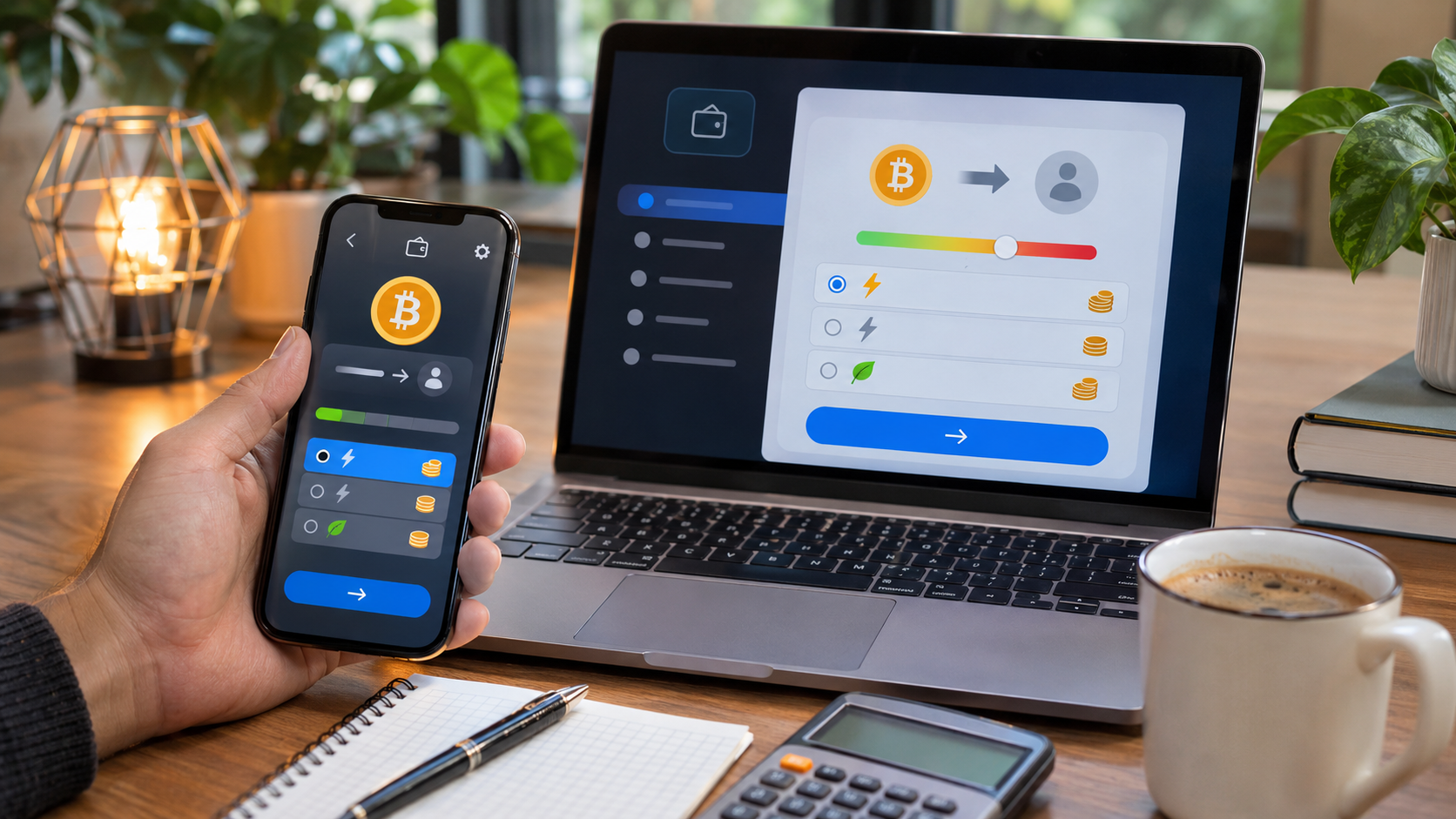


Sending $20 in cryptocurrency can cost $21, $25, or even more, depending on the blockchain, wallet, exchange, and network conditions. Crypto network fees are usually not calculated as a percentage of the amount being sent, which means a small transfer can incur a disproportionately large charge.
A $5 fee on a $20 payment represents 25% of the transfer's value. The same $5 fee on a $1,000 transaction represents just 0.5%. That difference explains why choosing the right network matters particularly when sending small amounts of Bitcoin, Ethereum, USDT, or USDC.
As the late-November 2026 holiday shopping period approaches, occasional cryptocurrency users may be considering small wallet transfers, gifts, or online payments. Understanding crypto network fees before confirming a transaction can prevent unexpected deductions, insufficient-gas errors, and transfers to unsupported blockchains.
The most important distinction is between the fee charged by a blockchain and additional charges imposed by an exchange or payment service. Both can affect the amount received, but they work differently and cannot always be avoided in the same way.
What Are Crypto Network Fees and Why Do They Exist?
Crypto network fees are charges associated with processing transactions on a blockchain. They help compensate the participants responsible for confirming transactions, support network security, and discourage excessive or malicious activity.
Most public blockchains have limited capacity for processing transactions. When demand increases, users may compete for available block space by offering higher fees, although the precise mechanism varies between networks.
A network fee is not the same as a bank transfer charge or an exchange's trading commission. It is part of the blockchain's transaction-processing mechanism, although custodial platforms may calculate and collect it differently from self-custody wallets.
For anyone unfamiliar with the underlying technology, understanding how blockchain works helps explain why transactions must be validated and why different networks apply different fee structures.
What Is the Difference Between Network Fees, Gas Fees, and Exchange Fees?
Network fees, gas fees, and exchange fees describe related but different costs. Ethereum uses the term gas to measure computational work, while Bitcoin fees primarily depend on transaction size and the fee rate offered to miners.
A cryptocurrency exchange may also impose its own charges for withdrawals, purchases, conversions, or other services. Those charges are not necessarily equal to the actual cost of processing a blockchain transaction.
| Fee type | What it pays for | When it applies |
| Network fee | Blockchain transaction processing | Sending assets or performing on-chain operations |
| Gas fee | Computational work on networks such as Ethereum | Transfers, swaps, and smart contract interactions |
| Withdrawal fee | Moving assets out of a custodial platform | Exchange-to-wallet transfers |
| Trading fee | Buying or selling cryptocurrency | Exchange trades |
| Conversion spread | Difference embedded in a quoted exchange rate | Purchases, sales, and swaps |
| Bridge fee | Moving assets between supported blockchains | Cross-chain transfers |
| Payment processing fee | Services provided by a payment platform | Certain purchases or transfers |
A single cryptocurrency transaction can involve several of these costs. The amount displayed as a network fee does not necessarily represent the complete cost of the transfer.
Why Can Sending $20 in Crypto Cost $25 or More?
A $20 cryptocurrency transfer can cost $25 when an additional $5 fee is required to complete it. Alternatively, a platform might deduct $5 from the amount being withdrawn, leaving the recipient with only $15.
The difference depends on how the wallet or exchange handles fees. A self-custody wallet usually requires the sender to hold enough native cryptocurrency to cover network costs, while an exchange may deduct withdrawal charges from the transferred balance.
The following examples are hypothetical. They demonstrate possible fee structures rather than current prices or typical fees on any particular blockchain.
| Transfer scenario | Amount intended | Example charges | Financial result |
| Self-custody transfer | $20 | $0.10 network fee | Sender spends $20.10 in total |
| Self-custody transfer | $20 | $2 network fee | Sender spends $22 in total |
| Self-custody transfer | $20 | $5 network fee | Sender spends $25 in total |
| Exchange withdrawal | $20 balance | $3 withdrawal fee deducted | Recipient receives $17 |
| Expensive withdrawal | $20 balance | $8 withdrawal fee deducted | Recipient receives $12 |
| Exchange withdrawal | $20 | Fee paid separately | Recipient receives $20; sender pays extra |
For self-custody token transfers, the amount sent and the gas fee are often paid in different cryptocurrencies. A $20 USDC transfer on Ethereum, for example, ordinarily requires ETH to pay for gas in addition to the USDC being sent.
These examples also show why a small advertised network fee should not be the only factor considered when choosing a withdrawal method.
How Much of a $20 Crypto Transfer Can Fees Consume?
A fixed $1 network fee consumes 5% of a $20 transfer's value. A $5 fee equals 25%, and a $20 fee equals the entire value of the intended transfer.
The relationship becomes clearer when comparing different fee amounts.
| Fee | Percentage of $20 |
| $0.05 | 0.25% |
| $0.25 | 1.25% |
| $0.50 | 2.5% |
| $1 | 5% |
| $2 | 10% |
| $5 | 25% |
| $10 | 50% |
| $20 | 100% |
These percentages describe the fee relative to the intended payment. They do not indicate how much any specific blockchain currently charges.
For small transfers, even a fee that seems modest in absolute dollars may represent a significant portion of the payment.
How Are Bitcoin Network Fees Calculated?
Bitcoin network fees depend primarily on the transaction's virtual size and the fee rate offered, rather than the dollar value of the Bitcoin being transferred. This means sending $20 worth of BTC can require the same network fee as sending $20,000 worth under comparable transaction conditions.
Bitcoin transactions use previously received amounts of BTC, known as unspent transaction outputs (UTXOs). A transaction using many inputs generally requires more block space than a simpler transaction with fewer inputs.
Fees are commonly expressed in satoshis per virtual byte, abbreviated sat/vB. One satoshi equals 0.00000001 BTC.
Bitcoin Transaction Fee Example
A Bitcoin fee can be estimated by multiplying transaction size by the selected fee rate. The result is the amount paid in satoshis, which can then be converted into BTC and a fiat-currency equivalent.
Consider a hypothetical 140-vbyte transaction using a fee rate of 5 sat/vB.
The calculation is:
140 vB × 5 sat/vB = 700 satoshis
Since 100 million satoshis equal one BTC, the network fee would be 0.000007 BTC.
The dollar equivalent depends on Bitcoin's market price at the time. A more complicated transaction containing additional inputs or outputs could require a higher fee even at the same sat/vB rate.
Why Small Bitcoin Transfers Sometimes Cost More Than Expected
Bitcoin network fees may become expensive relative to small payments when demand for block space increases. Users seeking faster confirmations may choose higher fee rates, raising the amount required for their transactions.
A wallet containing many small UTXOs can also produce larger transactions. This means two users sending the same BTC amount at the same moment may receive different fee estimates.
A second consideration is exchange withdrawal pricing. A custodial platform may charge a published withdrawal fee that differs from the fee it ultimately pays on-chain, including when the platform batches multiple customer withdrawals.
For a broader introduction to purchasing and managing BTC, the guide on how to buy Bitcoin covers exchange accounts, wallets, and common purchase-related charges.
Ethereum Gas Fees Explained for Small Crypto Transfers
Ethereum gas fees are calculated from the computational work required by a transaction and the price paid for each unit of gas. Sending ETH directly is generally less computationally intensive than transferring an ERC-20 token or interacting with a decentralized application.
Under Ethereum's EIP-1559 fee structure, the transaction price includes a protocol-determined base fee and a priority fee. The base fee is burned, while the priority fee goes to the validator proposing the block.
The general calculation is:
Gas used × (base fee + priority fee) = transaction fee in ETH
Gas prices are commonly shown in gwei. One gwei equals one-billionth of an ETH.
How Much Gas Does an Ethereum Transfer Use?
A standard ETH transfer between externally owned accounts generally uses 21,000 gas units. ERC-20 token transfers typically require more gas because they involve smart contract execution.
For example, suppose an ordinary ETH transfer uses 21,000 gas units at a combined gas price of 15 gwei.
The resulting fee is:
21,000 × 15 = 315,000 gwei
That equals 0.000315 ETH.
If ETH were hypothetically priced at $2,500, the fee would be approximately $0.79.
This is an illustrative calculation, not a live Ethereum fee estimate or ETH price. Actual gas prices and cryptocurrency values change, and token transfers can consume substantially more gas than a basic ETH transfer.
Why Sending USDT or USDC May Cost More Than Sending ETH
USDT and USDC are tokens that exist on multiple blockchains. When transferred as ERC-20 tokens on Ethereum Mainnet, they ordinarily require interaction with a token smart contract.
That interaction consumes more gas than a basic ETH transfer. Consequently, sending $20 worth of USDT can involve a larger Ethereum network fee than sending an equivalent value in native ETH.
For illustration, consider a token transfer using 65,000 gas units at 15 gwei. The resulting fee would be 0.000975 ETH, equivalent to approximately $2.44 at the hypothetical ETH price of $2,500.
Actual ERC-20 gas usage varies by token contract and transaction conditions. The example should not be used as a universal fee estimate.
A stablecoin's relatively stable dollar value does not mean transferring it is free or that its transaction fee is fixed.
Why Ethereum Gas Fees Change
Ethereum gas fees change as demand for available block space changes. Greater network activity can increase the base fee, while users may offer higher priority fees to encourage faster inclusion.
The complexity of the transaction also matters. A decentralized exchange swap, token approval, or interaction with a smart contract can require more computational work than an ordinary payment.
Modern wallets generally estimate an appropriate fee before the user signs a transaction. However, estimates can change as network conditions evolve, especially when the transaction remains pending.
Which Crypto Networks Have Lower Transfer Fees in 2026?
Different cryptocurrency networks use different fee mechanisms, and some are designed to support inexpensive everyday transactions. Ethereum Layer 2 networks and high-throughput blockchains can offer lower costs than Ethereum Mainnet for many routine transfers.
However, no network is universally cheapest for every asset, wallet, exchange, or transaction type. The cost also depends on whether assets must first be moved onto that network.
| Network | Fee mechanism or currency | Important consideration |
| Bitcoin Mainnet | BTC, based on transaction size and fee rate | Congestion and transaction complexity matter |
| Ethereum Mainnet | ETH gas | Token transfers and smart contracts may require more gas |
| Arbitrum | ETH for gas | Ethereum Layer 2 with separate network support |
| Base | ETH for gas | Ethereum Layer 2; receiving platform must support Base |
| OP Mainnet | ETH for gas | Ethereum Layer 2; fees depend on transaction and network conditions |
| Polygon PoS | POL for gas | Separate proof-of-stake network with its own compatibility requirements |
| Solana | SOL transaction fees | Base fee plus possible priority and other transaction-related costs |
| TRON | Bandwidth and energy resources, potentially paid through TRX consumption | Token transfers can require significant resources |
This comparison describes how these networks work, not their live prices. A network that usually supports inexpensive transfers can still become costly under particular conditions or when additional exchange and bridging charges apply.
Ethereum Layer 2 Fees Explained
Ethereum Layer 2 networks process transactions separately from Ethereum Mainnet while using Ethereum for important settlement or security functions. Networks such as Arbitrum, Base, and OP Mainnet can support lower transaction costs for many everyday operations.
Their fees generally reflect activity on the Layer 2 network and costs associated with posting or settling data through Ethereum. The exact fee model differs between implementations and can evolve through network upgrades.
Using an L2 is not the same as changing a wallet setting for an existing Mainnet balance. Assets must actually be present on the intended network before they can be transferred there.
Moving assets from Ethereum Mainnet to an L2 may require a bridge transaction, which can involve additional fees and risks.
Is Polygon Cheaper Than Ethereum?
Polygon PoS often supports less expensive routine transfers than Ethereum Mainnet, but the exact difference depends on current conditions and transaction complexity. Polygon PoS is a separate proof-of-stake network, not simply another name for Ethereum Mainnet.
Its native gas token is POL, which replaced MATIC as part of Polygon's network-token migration. Users transferring supported tokens on Polygon PoS generally need sufficient POL to cover transaction fees.
The key distinction is that receiving platforms must support the specific Polygon network and asset being transferred. An Ethereum address with the same visual format does not guarantee that a deposit service supports Polygon PoS.
The existing overview of Polygon cryptocurrency provides additional background on the network and its transition from MATIC to POL.
How Do Solana Transaction Fees Work?
Solana uses SOL to pay transaction fees. Its fee structure includes a base charge for signatures and an optional prioritization fee, with additional resource considerations depending on the transaction.
The documented base fee is 5,000 lamports per signature, where one SOL equals one billion lamports. Additional transaction instructions, priority settings, and token-account requirements can affect the total cost.
For some token transfers, the sender may also need to fund creation of a recipient's token account. This is separate from the ordinary transaction fee and can make a first-time transfer more expensive.
Solana's low base transaction fee should therefore not be interpreted as a promise that every token operation has the same total cost.
Why USDT and USDC Network Fees Are Different Across Blockchains
USDT and USDC can exist on different blockchain networks, and each network applies its own fee structure. A $20 USDT balance on Ethereum is not interchangeable with a $20 USDT balance on TRON without an appropriate cross-network transfer process.
This is one of the most important details for small-wallet users. The token name alone does not identify the blockchain on which a transaction will occur.
USDT ERC-20 vs. TRC-20 Fees
USDT ERC-20 transfers operate on Ethereum and require ETH for gas when sent through a standard self-custody wallet. USDT TRC-20 transfers operate on TRON, which uses bandwidth and energy resources.
TRON's fee mechanism is different from Ethereum's. Transactions can consume allocated or acquired resources, and insufficient resources may result in TRX being consumed to cover the cost.
TRC-20 is not automatically free or always cheaper than ERC-20. Fees depend on available resources, transaction conditions, and whether a custodial platform imposes separate withdrawal charges.
The recipient must explicitly support the chosen network. Sending USDT through a cheaper but unsupported blockchain can create a loss far greater than the network fee being avoided.
Why a USDC Transfer Can Require ETH, SOL, or POL
The native cryptocurrency required for gas depends on the blockchain hosting the USDC balance. A USDC transfer on Ethereum Mainnet ordinarily needs ETH, while a transfer on Solana requires SOL.
On Polygon PoS, the network uses POL for transaction fees. On Ethereum Layer 2 networks such as Base and Arbitrum, ETH generally pays for gas.
Some wallets or applications can sponsor transactions or provide alternative fee-payment arrangements. These features vary and should not be assumed available for every USDC transfer.
A user holding $20 USDC with no native gas token may therefore be unable to send it directly from a self-custody wallet, even if the USDC balance is sufficient to cover the intended payment.
Crypto Withdrawal Fees vs. Network Fees – Why Exchanges Can Charge More
A crypto exchange withdrawal fee can differ from the actual network fee paid to the blockchain. Custodial exchanges may process transactions in batches, use internal settlement systems, or establish withdrawal charges based on their own pricing policies.
This means a blockchain with inexpensive transfers does not automatically guarantee that withdrawing from an exchange will cost only a few cents.
Some platforms deduct withdrawal fees from the amount sent. Others require sufficient balance to pay the withdrawal fee separately, and certain services may subsidize specific transfers.
Why Does a $20 Exchange Withdrawal Arrive as $17?
A recipient might receive $17 from a $20 exchange balance if the platform deducts a $3 withdrawal fee. The exact result depends on the exchange's fee calculation, minimum withdrawal amount, and transfer settings.
A withdrawal preview should indicate the intended amount, fee, network, and final amount the recipient is expected to receive. If the platform does not provide a clear breakdown, the transfer should not be confirmed until the terms are understood.
The actual network transaction fee visible on a blockchain explorer may differ from the exchange's customer-facing withdrawal charge.
This difference is not automatically evidence of wrongdoing. Custodial services may use batching or their own fee schedules, but the full charge should be disclosed before the customer authorizes the withdrawal.
Are Transfers Between Users on the Same Exchange Free?
Some exchanges provide internal transfers between accounts without broadcasting a separate blockchain transaction. Such transfers can be free or subject to different platform-specific charges.
However, an internal exchange transfer is not the same as withdrawing cryptocurrency to a self-custody wallet. The exchange typically remains responsible for holding and administering the assets until they are withdrawn.
Check whether the recipient has an account with the same service and whether the transfer method is explicitly internal. Never assume a standard blockchain withdrawal will be processed internally merely because the recipient also uses that exchange.
How to Check Crypto Network Fees Before Sending Money
The safest way to check crypto network fees is to examine the transaction preview before confirming it. The preview should identify the asset, network, recipient, amount, and estimated charges.
For self-custody wallets, the estimate may include gas paid in a native cryptocurrency. For exchanges, the preview may instead display a withdrawal fee, amount to be deducted, and expected recipient balance.
A useful pre-transfer checklist includes the following steps.
- Identify the cryptocurrency. Confirm whether the asset is BTC, ETH, USDT, USDC, or another token. Similar names and symbols do not establish that two assets are identical.
- Confirm the blockchain network. Verify that both the sending wallet and receiving service support the exact network and token.
- Check the recipient address. Compare the full address using a trusted channel, rather than relying only on its first and last characters.
- Review the estimated network fee. Check the amount, fee currency, and whether it changes the amount the recipient will receive.
- Check additional exchange charges. Look for withdrawal fees, conversion spreads, service charges, and minimum transaction requirements.
- Confirm sufficient gas funds. Ensure the wallet contains the required native token if the network charges fees separately.
- Review the transaction total. Compare the complete amount spent with the expected value received.
- Confirm only when every detail matches. Do not authorize a transaction if the destination network, address, or displayed amount is unclear.
The final transaction preview is more useful than an old screenshot of a network fee or a general comparison table. Fee levels and platform pricing can change, sometimes quickly.
How to Calculate the Real Cost of a Crypto Transfer
The complete transfer cost is the difference between the economic value spent and the amount received, after accounting for network fees and any additional service charges. The calculation must also consider whether conversion or bridging is involved.
For a simple self-custody transfer with the fee paid separately, the formula is:
Total sender cost = value sent + network fee
For an exchange withdrawal where the fee is deducted from the transferred asset:
Recipient amount = withdrawal amount − applicable deduction
For a conversion followed by a withdrawal, the calculation becomes more complicated because trading fees, the exchange rate, and withdrawal charges can all influence the result.
When different cryptocurrencies are involved, their fiat values should be measured at the relevant transaction times. Prices can change between purchasing, transferring, and receiving an asset.
7 Ways to Reduce Crypto Network Fees Without Taking Unnecessary Risks
Reducing crypto network fees usually involves selecting an appropriate network, avoiding unnecessary transactions, and checking all costs before confirmation. However, the cheapest option is not always the safest or most suitable.
The following approaches can reduce costs in appropriate circumstances.
- Use a supported lower-cost network. Ethereum Layer 2 networks and other blockchains may offer cheaper transfers, provided the sender and recipient support the exact asset and network.
- Avoid unnecessarily urgent transactions. Some networks and wallets allow lower-priority transactions that may confirm more slowly.
- Compare exchange withdrawal options. Check whether the platform supports multiple networks and how much each withdrawal method costs.
- Avoid repeated small transfers. Consolidating necessary payments can reduce some per-transaction overhead, although fees and security considerations vary by blockchain.
- Consider compatible payment networks. Bitcoin's Lightning Network may be suitable for small payments when both parties use compatible services.
- Review bridging costs before moving assets. A cheap transfer on another network may not justify the expense of moving funds there.
- Check the final amount received. A lower gas fee may be offset by trading commissions, spreads, withdrawal fees, or other costs.
These strategies should be evaluated using the complete transaction cost. Saving $1 in fees is not worthwhile if the chosen method introduces an unnecessary risk of losing the entire transfer.
Can Bitcoin Lightning Payments Reduce Small Transfer Costs?
Bitcoin's Lightning Network is designed to support fast, low-cost payments without recording every individual payment directly on the Bitcoin blockchain. It can be particularly useful for smaller transactions between compatible wallets or services.
However, Lightning payments have their own routing and service considerations. Opening or closing self-managed payment channels can involve on-chain fees, and some custodial providers charge processing fees.
Both the sending and receiving services must support the selected payment method. A regular Bitcoin address and a Lightning payment request are not interchangeable.
Is Bridging Crypto to a Cheaper Network Worth It?
Bridging can reduce future transaction costs when assets will be used repeatedly on a supported lower-cost network. For a single $20 payment, however, bridge charges and additional transaction steps may outweigh any savings.
Moving assets from Ethereum Mainnet to another network generally requires a bridge or an exchange-supported transfer process. Depending on the method, this can involve gas fees, bridge service charges, and other costs.
Bridges also introduce security and operational risks, including smart contract vulnerabilities, unsupported assets, and incorrect destination settings.
Changing the selected network in a wallet does not automatically move cryptocurrency from one blockchain to another. The assets must be transferred using a supported process.
What Happens if Crypto Is Sent on the Wrong Network?
Cryptocurrency sent through an unsupported network may become inaccessible to the intended recipient. Blockchain transactions generally cannot be reversed simply because the sender selected the wrong chain.
The outcome depends on the asset, blockchain, destination address, receiving wallet, and whether the recipient controls the relevant private keys.
Can the Same Wallet Address Work on Different Networks?
Some Ethereum-compatible blockchains use addresses with the same format. A wallet may control the same address on Ethereum Mainnet, Base, Arbitrum, and Polygon PoS, but the assets remain on separate networks.
For self-custody wallets, a transfer may be visible after switching to the blockchain actually used, provided the wallet supports that network and the transferred token. This does not mean the asset was automatically bridged to the intended chain.
For custodial exchanges, sending an asset through an unsupported network can be significantly more difficult. The platform may not support recovery, and the funds could be permanently lost.
Can Crypto Sent to the Wrong Blockchain Be Recovered?
Recovery is sometimes possible when the recipient controls a compatible self-custody wallet, but there is no universal solution. In other cases, particularly unsupported custodial deposits, recovery may be unavailable.
The first step is to identify the exact transaction using an appropriate blockchain explorer. Confirm the network, destination address, token contract, and transaction status without sharing private credentials.
If the intended recipient is an exchange, contact its official support channel and provide the transaction details. Never share a seed phrase or private key with someone offering to retrieve the funds.
A transaction that has completed on one blockchain cannot simply be canceled and resent on another.
Why Crypto Network Fees May Still Be Charged When a Transaction Fails
A failed blockchain transaction can still consume fees because the network may have spent resources processing its execution. This is particularly relevant to Ethereum smart contract operations and certain transactions on other programmable blockchains.
For example, a transaction that runs out of gas during execution may revert its intended changes while still consuming gas. This differs from a transaction rejected before it is included on-chain.
The amount charged depends on the blockchain, failure type, and transaction details. An error message inside a wallet should therefore be examined before attempting the same operation again.
What Does Insufficient Gas Mean?
An insufficient-gas or insufficient-funds warning usually means the wallet cannot cover the required network charge. This can happen even when the wallet contains enough USDT or USDC to cover the payment itself.
For example, a self-custody wallet holding $20 in Ethereum-based USDC but no ETH generally cannot pay the gas required for a standard ERC-20 transfer.
The solution is not necessarily to reduce the USDC amount. The wallet may need enough ETH for gas, or the user may need to select another legitimate transfer method that supports the existing assets.
Avoid following unsolicited messages that demand a separate deposit to unlock funds. Legitimate gas requirements should be visible through the wallet or official service, not communicated through an unknown support account.
Why Is a Crypto Transaction Pending for So Long?
A pending transaction may result from insufficient fee priority, congestion, network issues, or other technical conditions. The transaction should be checked using its hash and the appropriate blockchain explorer.
Some Bitcoin wallets support fee replacement through Replace-by-Fee, while Ethereum wallets may offer transaction speed-up options. These tools are network- and wallet-specific and can increase the final cost.
Do not automatically submit a new payment to the same recipient because the original transaction appears slow. First determine whether the pending transaction can still confirm, since duplicate payments may otherwise occur.
Crypto Network Fee Scams and Wallet Security Mistakes
Crypto network fee scams often exploit confusion about gas payments, unsupported networks, or pending withdrawals. Fraudsters may claim that an additional payment is required to release cryptocurrency, verify a wallet, or reverse an unsuccessful transfer.
Some legitimate transactions do require native cryptocurrency for fees. The warning sign is an unexpected demand made through an unofficial website, direct message, or supposed support representative.
For example, a fraudulent platform may display a fake balance and then demand a substantial "network fee" before permitting withdrawal. Paying the charge does not establish that the displayed cryptocurrency exists or can be recovered.
Several precautions are especially important:
- Never share a seed phrase or private key. Legitimate transaction processing does not require disclosing wallet recovery credentials.
- Verify the destination network. Do not select a cheaper chain unless the recipient confirms support.
- Check token contracts carefully. Tokens with familiar names or symbols may be counterfeit.
- Avoid unsolicited support messages. Wallet and exchange impersonators frequently offer fake recovery services.
- Review smart contract permissions. An approval can grant spending authority beyond the immediate transaction.
- Use trusted wallet software. Download applications through verified developer websites or official distribution channels.
- Treat unexpected recovery charges as suspicious. Blockchain transactions generally cannot be reversed by paying a third party.
A secure wallet and careful transaction verification are essential even when the amount being transferred is small. The comparison of secure cryptocurrency wallets provides additional background on wallet protection and custody options.
The safest transfer is not simply the one with the lowest displayed fee. It is the one where the asset, network, recipient, and complete costs have all been verified.
Are Crypto Network Fees Tax-Deductible or Taxable?
Crypto network fees can affect tax calculations, but their treatment depends on the transaction and the taxpayer's jurisdiction. A fee paid to transfer cryptocurrency between personally controlled wallets may be treated differently from a fee associated with acquiring, selling, or exchanging digital assets.
In the United States, transferring cryptocurrency between wallets or accounts owned by the same taxpayer is generally not itself a taxable disposition. However, the treatment of transaction fees and any separate disposal of cryptocurrency used to pay those fees can require additional analysis.
The IRS treats digital assets as property for federal tax purposes. Taxable activity can arise from selling cryptocurrency, exchanging one digital asset for another, or using digital assets to pay for goods or services, depending on the circumstances.
UK and EU taxpayers are subject to their own national rules, which may differ from US treatment. The European Union does not impose one uniform personal capital gains tax regime for every cryptocurrency transaction.
Keep records of transaction dates, asset quantities, fee amounts, exchange rates, and transaction hashes. These details can be important for calculating acquisition costs, proceeds, gains, or losses.
Crypto Network Fees Explained for Different Payment Scenarios
The best transaction method depends on what is being sent, where the assets currently reside, and what the recipient supports. A method that works well for a frequent cryptocurrency user may be unnecessary or expensive for an occasional $20 payment.
The following scenarios illustrate which costs deserve attention.
| Scenario | Main cost to check | Important decision |
| Send $20 in Bitcoin | BTC fee rate and transaction size | Whether on-chain payment is suitable |
| Send $20 USDT on Ethereum | ERC-20 gas paid in ETH | Whether the full cost justifies the transfer |
| Send $20 USDT on TRON | Resource requirements and withdrawal pricing | Whether the recipient supports TRC-20 |
| Send $20 USDC on Base | L2 network fee and available ETH | Whether both wallets support Base |
| Withdraw $20 from an exchange | Withdrawal fee and minimum amount | Whether enough value remains after deductions |
| Move funds from Ethereum to an L2 | Gas and bridge costs | Whether future savings justify bridging |
| Send crypto between personal wallets | Network charge and gas balance | Whether the transfer is necessary |
| Send a small Bitcoin payment through Lightning | Routing and service charges | Whether both parties support Lightning |
The cost of an individual transfer cannot be determined solely from the asset's name or the amount being sent. Network compatibility, platform charges, and transaction complexity must be considered together.
A 30-Second Crypto Network Fee Checklist Before Every Transfer
A short final check can prevent many of the most expensive cryptocurrency transfer mistakes. It is especially useful when the payment is small enough that a fixed charge could consume a significant percentage of its value.
Before confirming the transaction, answer these six questions:
- Is this the correct cryptocurrency? Confirm the exact asset and token rather than relying on the ticker alone.
- Is this the correct network? Make sure the receiving wallet or exchange explicitly supports it.
- Is the recipient address correct? Verify the full address through a trusted source.
- How much is the network fee? Check its amount and the cryptocurrency used to pay it.
- Are there additional charges? Include exchange withdrawal fees, conversion costs, and bridge charges where applicable.
- What will the recipient actually receive? Review the final preview and confirm that the result is acceptable.
If any answer remains unclear, the transaction should not be authorized. A few additional checks are usually less costly than trying to recover cryptocurrency sent through an unsupported network.
Frequently Asked Questions About Crypto Network Fees
Crypto network fees are often determined by blockchain activity, transaction size, or computational requirements rather than the amount sent. A fixed $5 fee represents 25% of a $20 payment but only 0.5% of a $1,000 transfer.
The fee depends on Bitcoin network conditions, transaction size, and the selected fee rate. It cannot be calculated reliably from the $20 amount alone. Check the wallet's fee estimate and any additional exchange withdrawal charge before sending.
Ethereum gas fees fluctuate with network demand and transaction complexity. A simple ETH transfer generally requires 21,000 gas units, while token transfers can require more. The dollar cost also changes with ETH's market price.
USDT held as an ERC-20 token on Ethereum ordinarily requires ETH to pay for gas. The USDT balance and gas balance are separate. A wallet with sufficient USDT but no ETH may be unable to complete a standard transfer.
TRON and Ethereum use different fee systems, so costs depend on network conditions, available resources, and exchange pricing. TRON may offer lower costs for some transactions, but TRC-20 transfers are not universally free or guaranteed to be cheaper.
Yes. Network fees can exceed the value of a small transfer, particularly during expensive network conditions or complex transactions. Wallets and exchanges may reject transactions when the available balance cannot cover the required fee.
There is no single cheapest network for every user and transaction. Some Ethereum Layer 2 networks and other supported blockchains can offer low fees, but the total cost depends on withdrawal charges, available gas tokens, and receiving-wallet compatibility.
Yes. Exchanges may establish withdrawal fees independently of the actual on-chain transaction cost. These charges may reflect service pricing, network estimates, or transaction batching. Review the platform's final withdrawal preview before confirming.
Yes. Fees can change as network demand, transaction priority, and available block space change. Waiting for less congested conditions may reduce costs on some blockchains, although lower fees or faster confirmations are never guaranteed.
Certain custodial platforms offer free internal transfers, and some services subsidize selected transactions. However, ordinary on-chain transfers generally involve network costs. A service advertising zero network fees may still charge for other parts of the transaction.
Some blockchains charge fees for computational work even when a transaction fails. On Ethereum, a reverted smart contract transaction can still consume gas. The exact outcome depends on the failure and whether the transaction was included on-chain.
It can. If the recipient does not support the selected network, funds may become inaccessible or permanently lost. Recovery depends on the blockchain, asset, receiving service, and who controls the destination wallet. Confirm compatibility before sending.
Not necessarily. Transfers between self-custody wallets generally require blockchain network fees, even when both wallets belong to the same person. Some custodial services offer free internal transfers, but their terms differ from ordinary on-chain transactions.
A test transfer can reduce address or network-compatibility risk, but it also incurs additional fees and is not a guarantee against every error. When fees are high relative to the amount, verify compatibility carefully and assess whether the extra transaction is worthwhile.